
NEWS
Ogbonnaya Ọnụ Polytechnic Commences Registration for ECOWAS National Biometric Identity Card

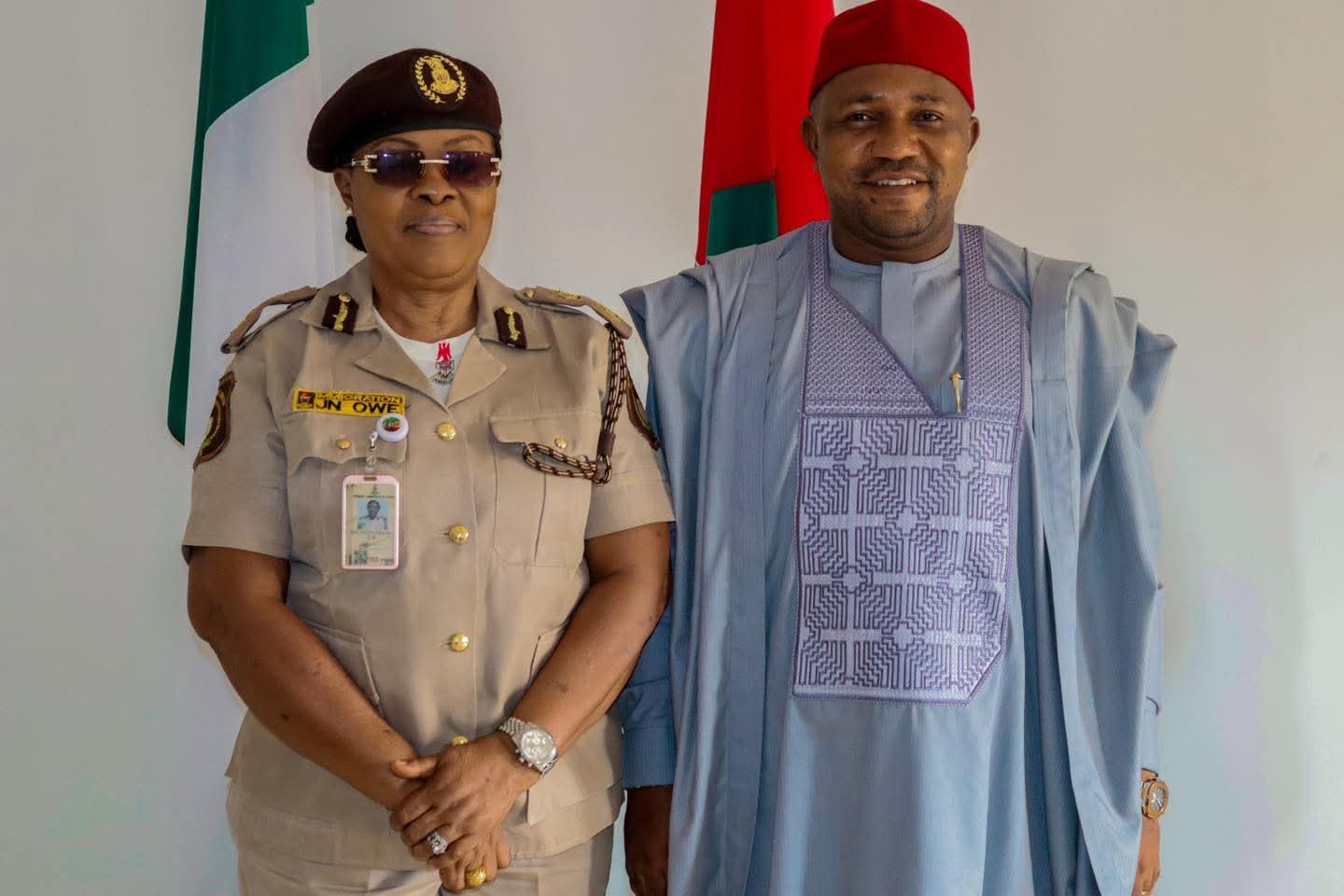
The Rector of Ogbonnaya Ọnụ Polytechnic Aba, Prof. Christopher Kalu Okoro has directed members of the institution’s management team to commence registration for the new ECOWAS National Biometric Identity Card (ENBIC) Application Services, a digital system designed to replace the paper-based ECOWAS Travel Certificate while serving both as a travel document and resident identification card.
Prof. Okoro gave the directive on Tuesday when he received the 29th Controller of the Nigeria Immigration Service, Abia State Command, CIS J. N. Owe, and her delegation on a courtesy visit to the Rector.
The meeting, held at the institution’s Council Chambers, focused on fostering cooperation between the Immigration Service and tertiary institutions in the state, particularly in areas relating to migration management, institutional data coordination, and regulatory compliance involving foreign nationals within academic environments.
Prof. Okoro Kalu commended the Immigration Service for prioritizing institutional sensitization despite demanding official schedules, describing the visit as a demonstration of respect for both the state and the polytechnic community.
He reaffirmed the institution’s readiness to collaborate fully with the agency in advancing compliance and administrative efficiency.
The Rector also acknowledged the ongoing reforms of the Abia State Government under Governor Alex Otti, noting that recent interventions have contributed significantly to repositioning the institution within the state’s broader development agenda.
The Rector equally extended condolences to the Nigeria Immigration Service on the death of one of its personnel in Umuahia, acknowledging the loss as painful.
Speaking earlier, CIS J. N. Owe underscored the Service’s statutory responsibility to enhance border security and maintain accurate records of foreign students and staff.
She explained that the introduction of mandatory electronic migrant registration would enable authorities to efficiently document and monitor foreign nationals, thereby preventing irregular residency and improving institutional accountability.
The Controller further emphasized the need for structured record-keeping and periodic verification of foreign students, especially within the ECOWAS sub-region.
According to her, the proposed partnership will facilitate seamless updating of foreign personnel records, support international academic recruitment, and ensure strict adherence to immigration regulations across tertiary institutions.